It’s a rainy Sunday in mid-December, so what better time to look back on a sunny trip to southern Japan from just a few months back in October. These days, I tend to not plan trips in advance – and the last few times we have actually just booked the day before. And so, with a week of clouds and rain forecast for Tokyo, we spontaneously found ourselves flying to Kagoshima where we could still enjoy summer temperatures. Our flights from Haneda were extremely cheap and so we splurged a little on the Sheraton where we were able to enjoy the onsen and relax.
I lived in Fukuoka for a year straight out of university so I am familiar enough with Kyushu, but this was my first time to Kagoshima, and the furthest south I had been in the prefecture. Because it is right at the southern tip of mainland Japan, it feels isolated but not in a negative or lonely way. I guess I liked how the city is just down there, quietly doing its own thing, seemingly unaware of the rest of Japan. The downtown area is connected by a tram system that slowly weaves its way back and forth across the city, and the vibe is definitely a lot slower than Tokyo. Saying that, like a lot of small/mid-sized cities in Japan, things can be quite spread out and so you end up walking a lot more than you do in the capital.
Despite only being down there for a few nights it was a really refreshing trip and one of my favourites in recent years. I think swimming in the sunshine at the base of Sakurajima volcano – when I knew it was pissing down in Tokyo – made it all the more satisfying.
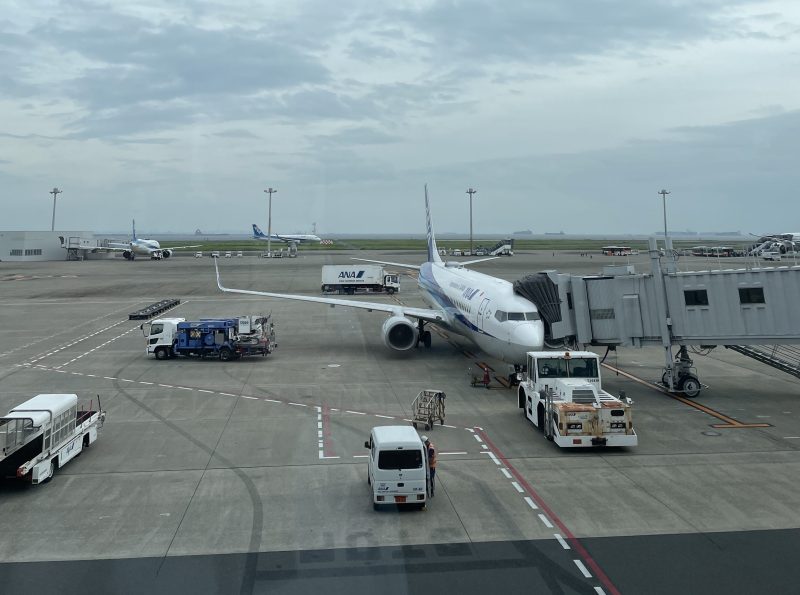
I’m surprised we got our flights so cheap. ANA is a very good airline, and Haneda is usually the more expensive of the two airports. Saying that, I think our flights cost only about 15,000yen return. Haneda is always a pleasure to fly out of. It was overcast as we left Tokyo… 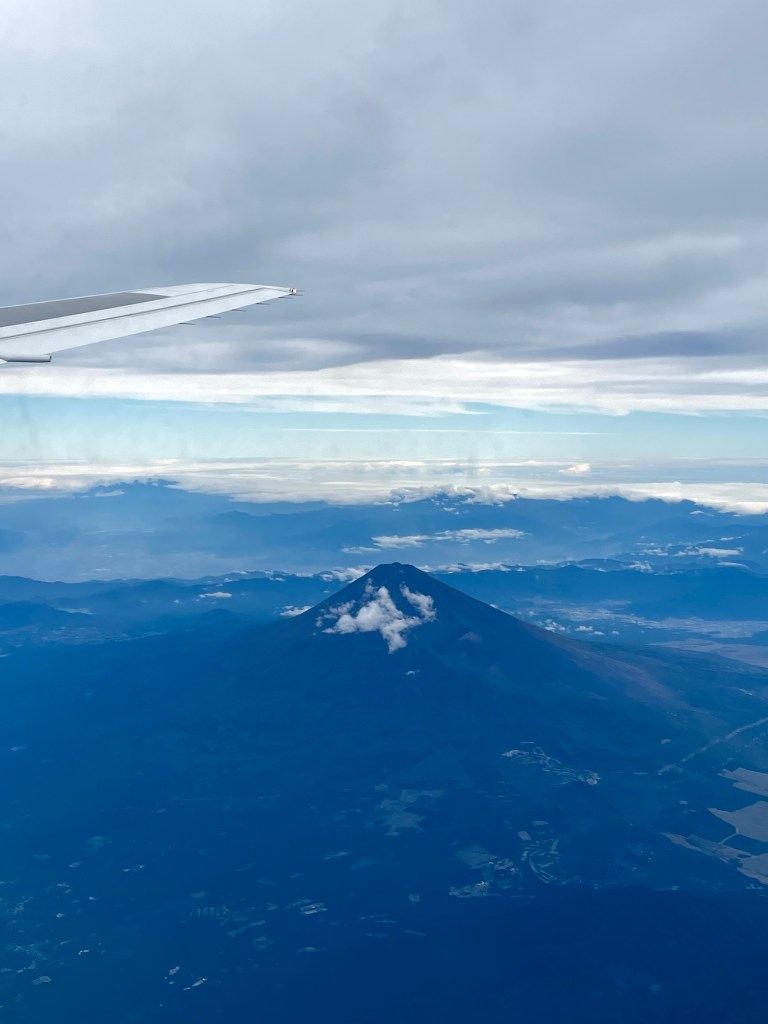
And Fuji looked rather ominous as we flew by. 
As we approached southern Japan we were greeted with blue skies… 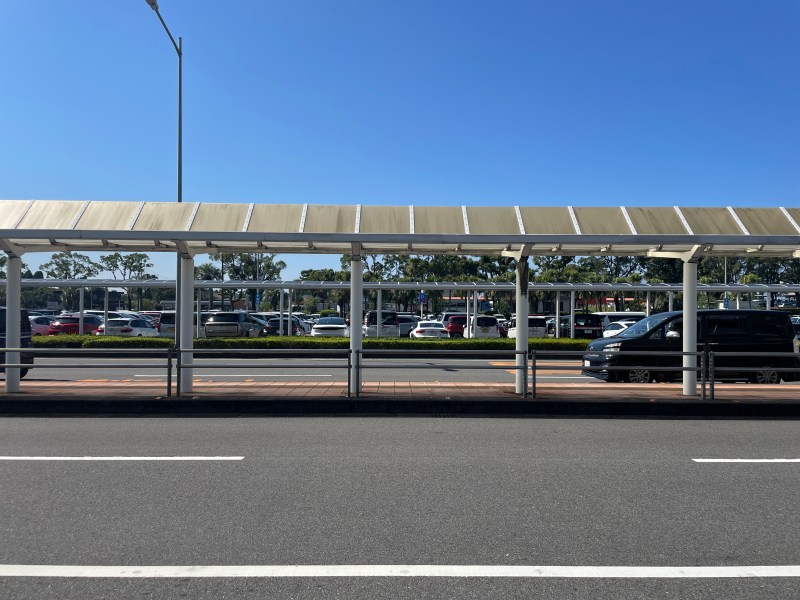
And when we landed it was a sunny 32 degrees. Kagoshima airport is super cute/small, and outside the front door there is even a hot spring footbath that you can use for free. 
There was a tram stop right outside our hotel. Interestingly, the trams run on tracks surrounded by grass and share the roads with cars. Because it was sunny during our stay, taking the tram was a pleasant experience, but I can’t help but wonder what it must be like during a blizzard or typhoon. There isn’t much shelter on the platforms, and the trams themselves don’t hold that many people. Kagoshima has no subway network, so you are kind of reliant on the trams unless you cycle/drive. 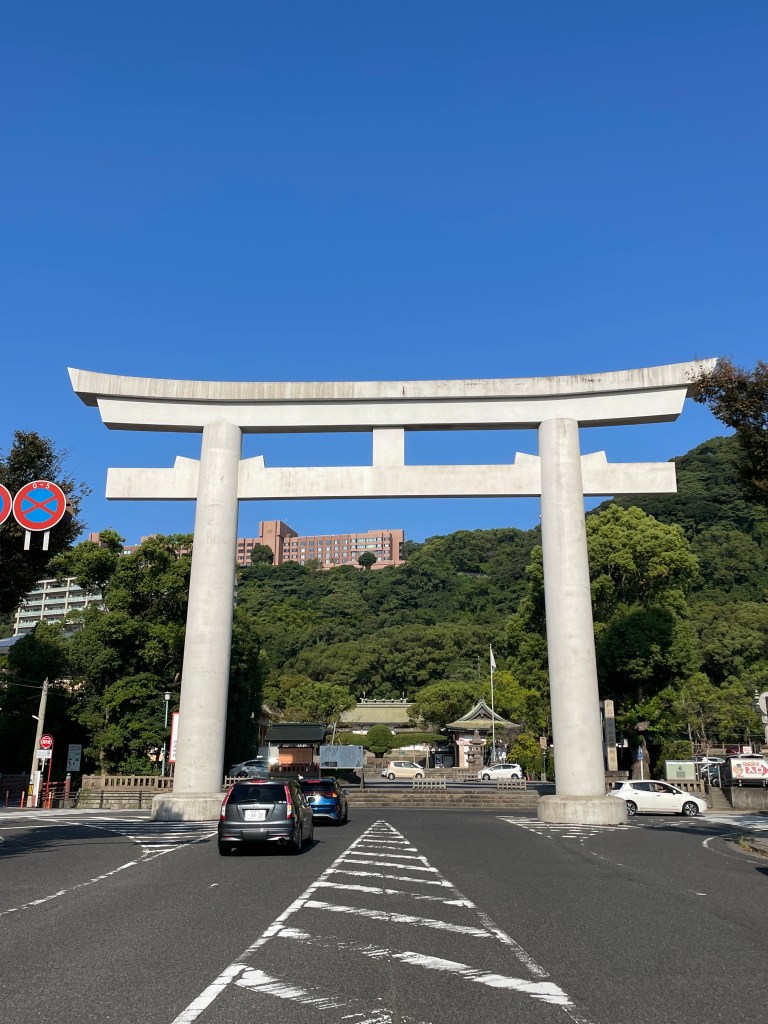
A 20m-tall torii gate at Terukuni Shrine. We climbed up Shiroyama in the background, befriending an old Japanese gentleman who was 90. He told us he treks up and down it every other day to keep fit. 
Kagoshima is famous for kurobuta – a flavoursome pork that comes from black pigs. It is definitely sweeter and more tasty than regular pork. For one lunchtime meal, we ate it as shabu-shabu, cooking the thinly sliced pork in a simmering broth with vegetables. 
Sengan-en, overlooking Sakurajima volcano, is one of Japan’s most famous traditional gardens. The home belonged to the Shimazu Clan, one of the most powerful feudal clans during the Edo Period (1603-1868). 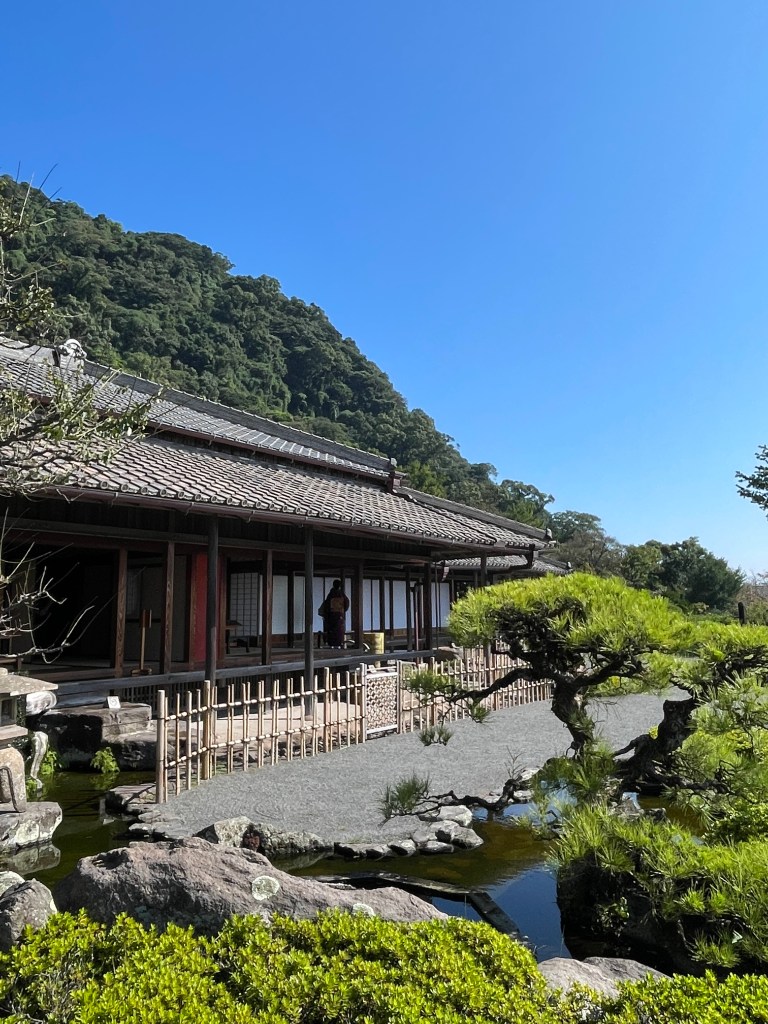
Both the interior and exterior of the home have been pretty well preserved and you are able to walk about and explore. 
It was nice to sit and look out over the internal courtyard. 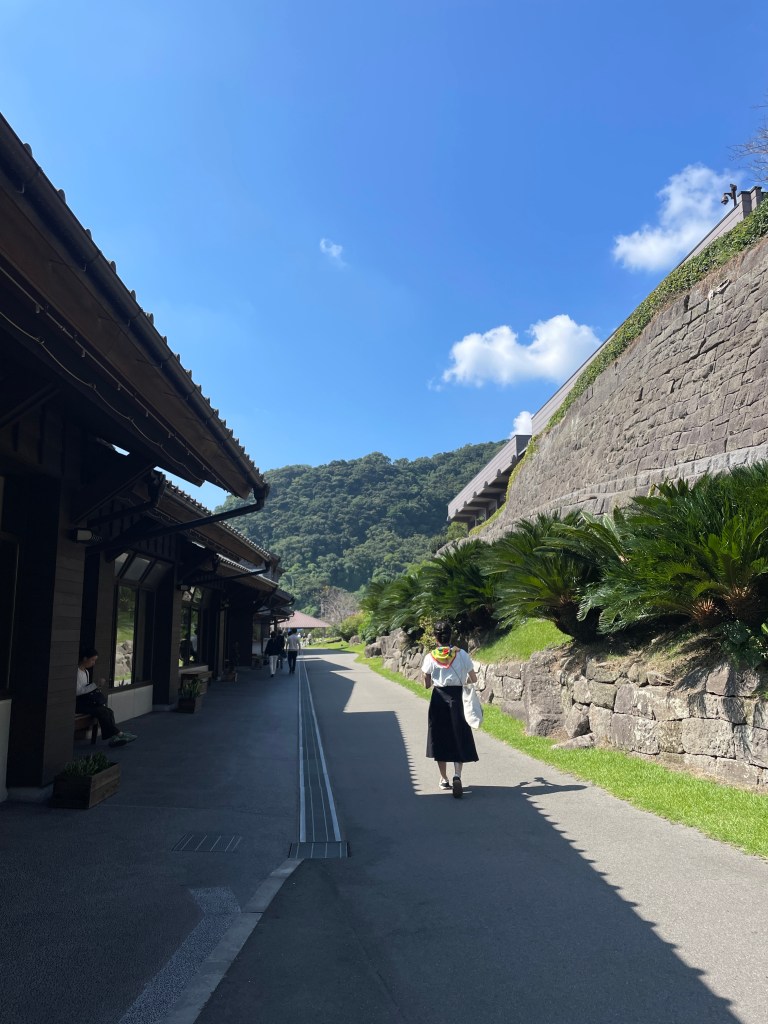
The grounds are pretty extensive… 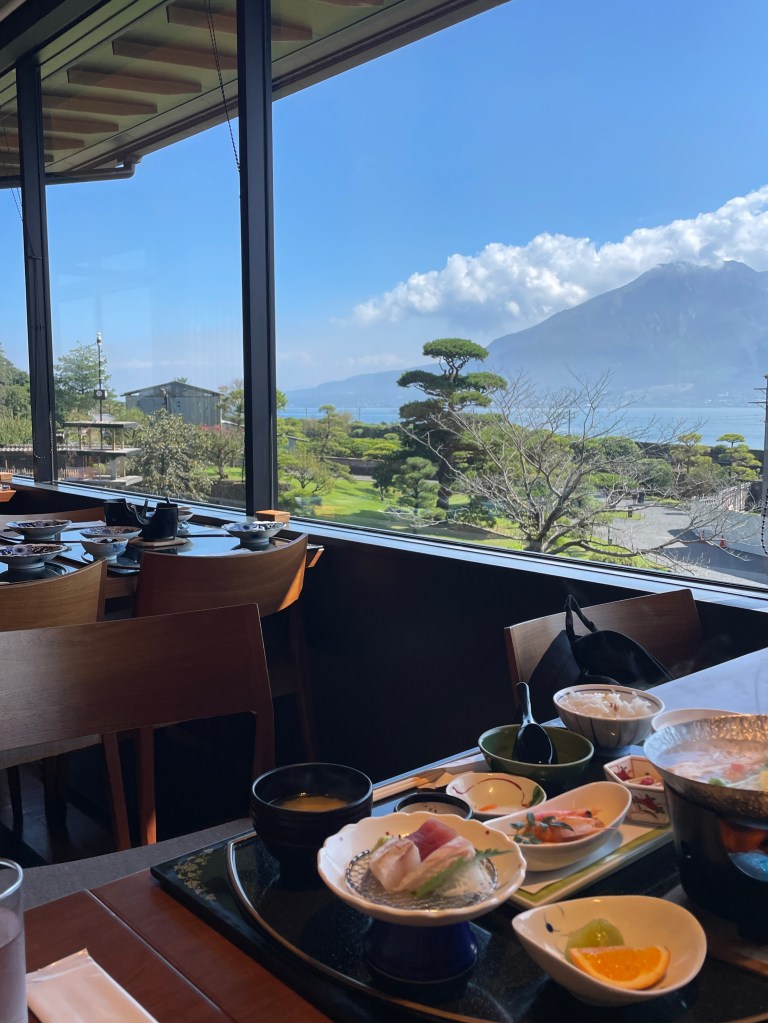
And there is a restaurant within the area now that allows you to eat while overlooking the volcano. 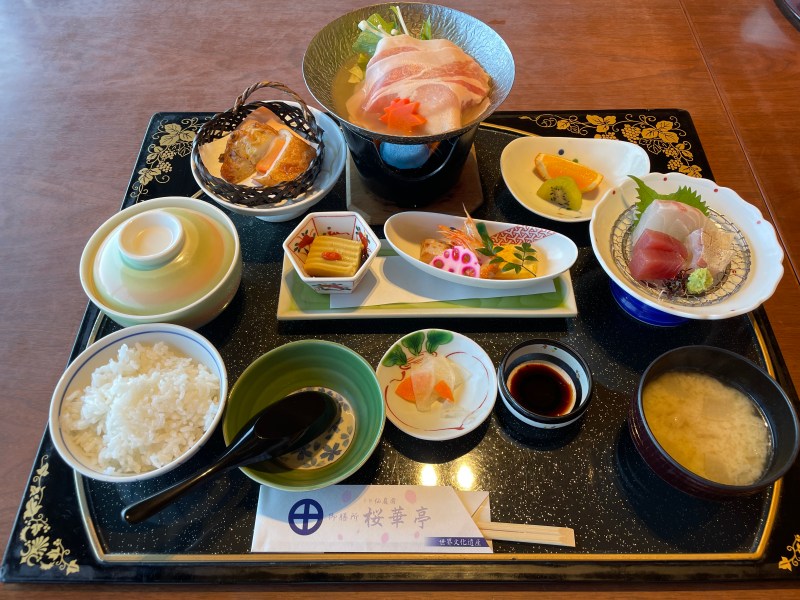
A beautifully presented traditional meal featuring kurobuta (again), as well as sashimi and satsuma-age – fried fishcakes that are famous in this region. 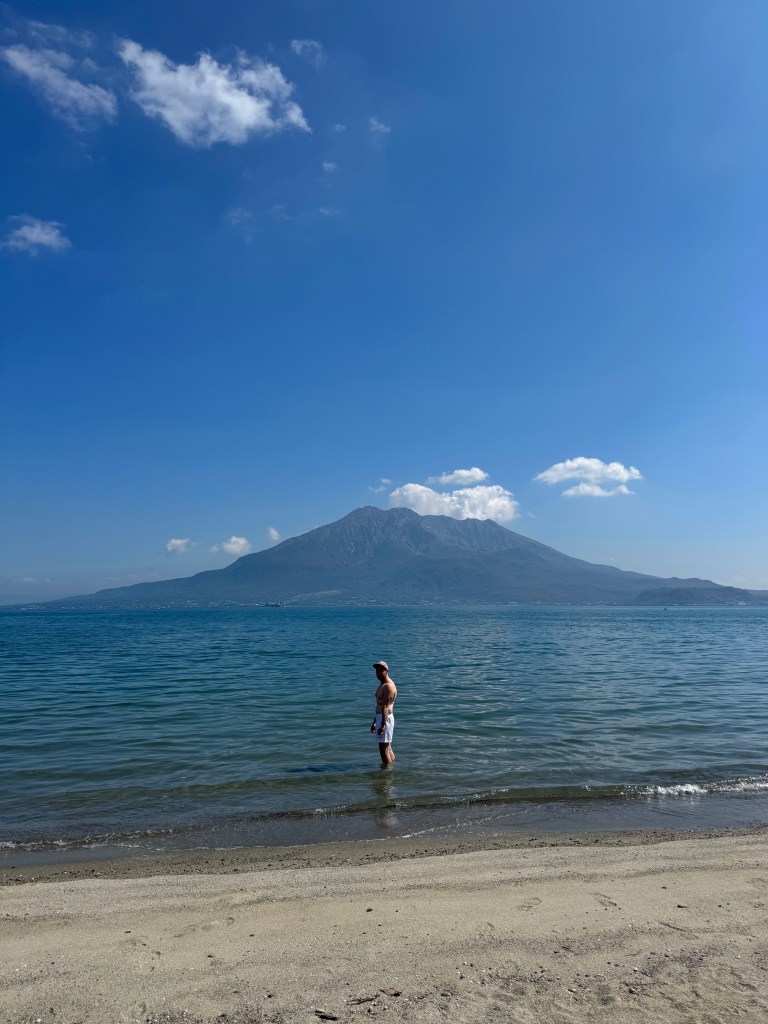
Taking advantage of the weather, I couldn’t resist taking a dip in the shadow of the volcano. We could see fish swimming about our feet and it was a serene moment. Because the sea retains the temperature from three month’s prior, it was basically July temperatures in the water. 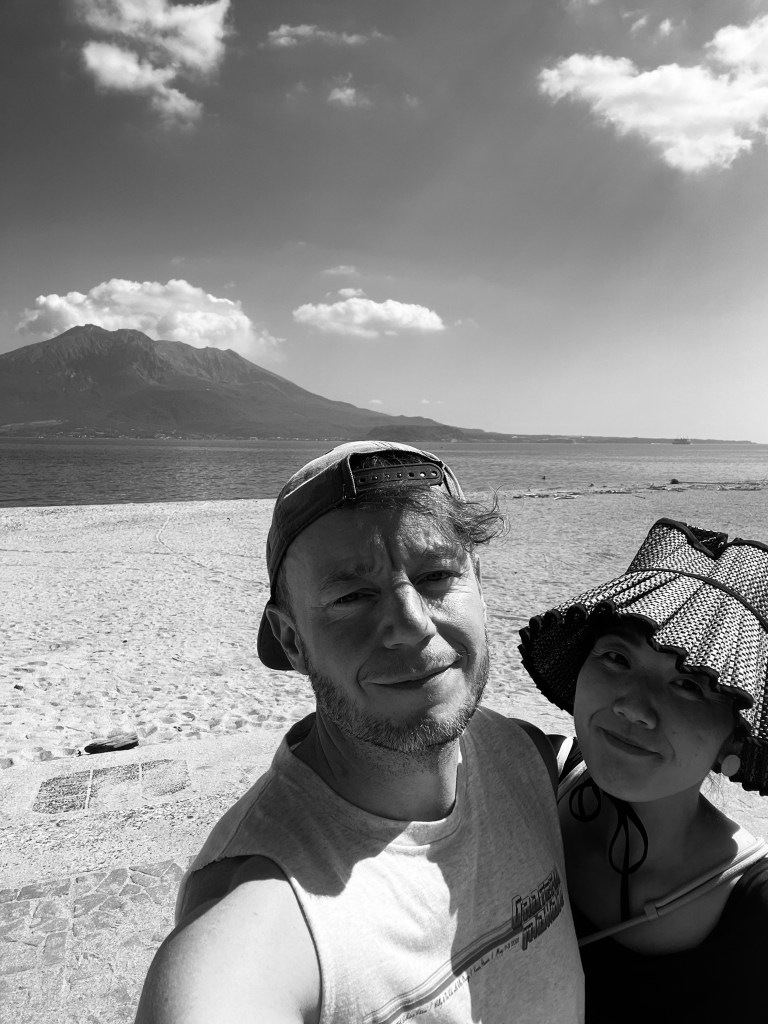
Sakura-jima selfie 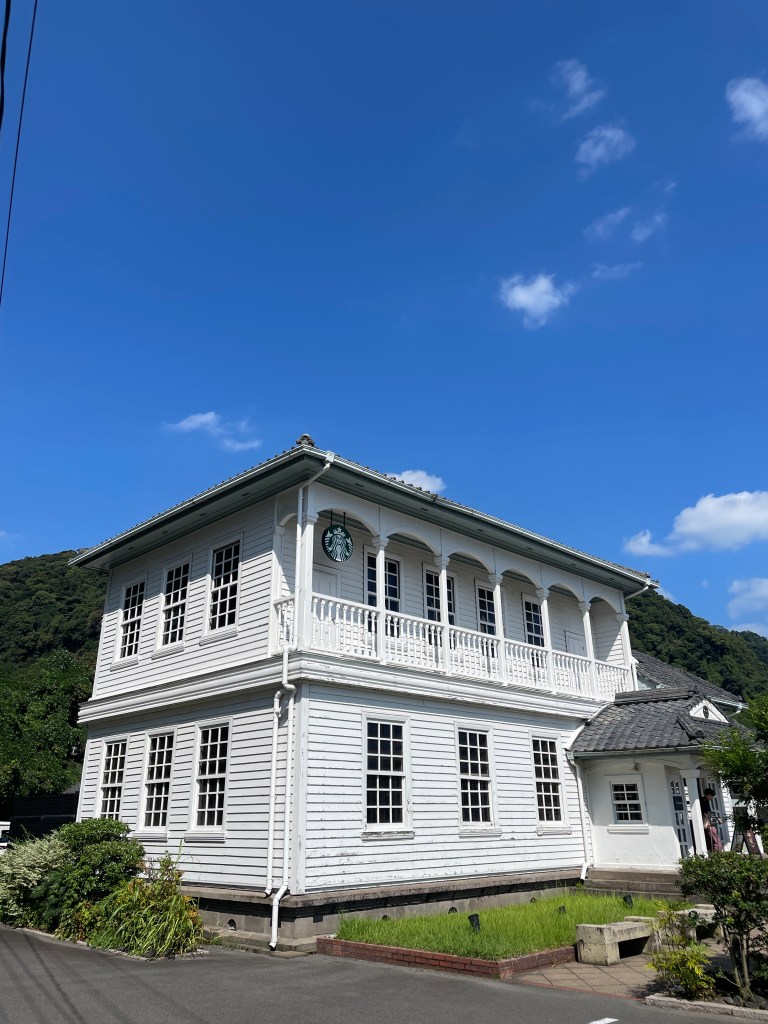
The Shimazu family that i mentioned above didn’t just own Sengan-en – they basically governed the entire Kagoshima region. This building, next to the gardens, used to be a Mining Office but has now been renovated as a Starbucks. On paper, this sounds like quite a capitalist idea, but the cafe is actually very nice and maintains lots of original features. The building itself is a registered tangible cultural property and is a nice place to drink an iced coffee and read a book. We went in here after our swim. 
At night, when viewed from a distance, the yellow glow from these one-car trams really stands out against the surrounding darkness. Some of the models are very, very old, with aging net curtains across the windows. Riding them, you can’t help but feel the weight of history – they’ve been tootling back and forth through the streets for decades, almost like a miniature, moving model of the city itself. 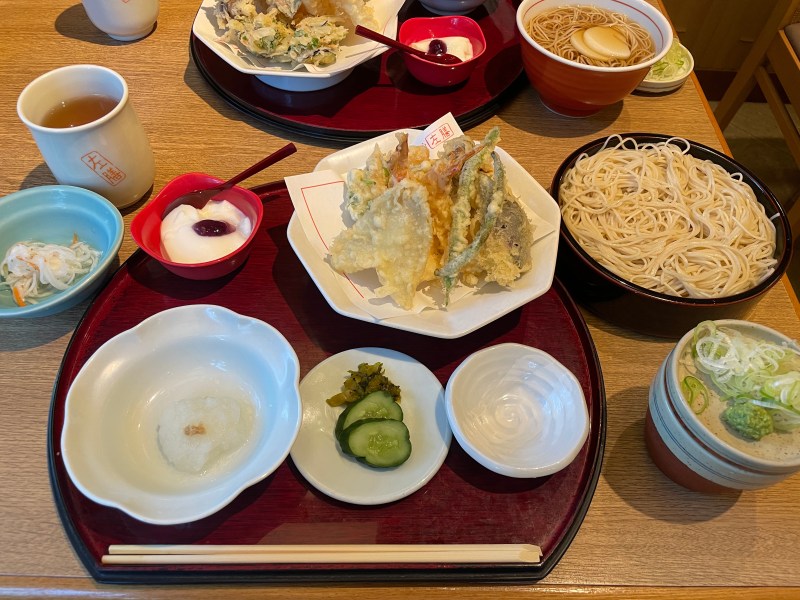
Another very nice (and affordable) meal – this time from a tempura place called Tempura Sazen near our hotel. Rather randomly, before our meal we were served a little dish of miso paste that I can still remember the taste of. 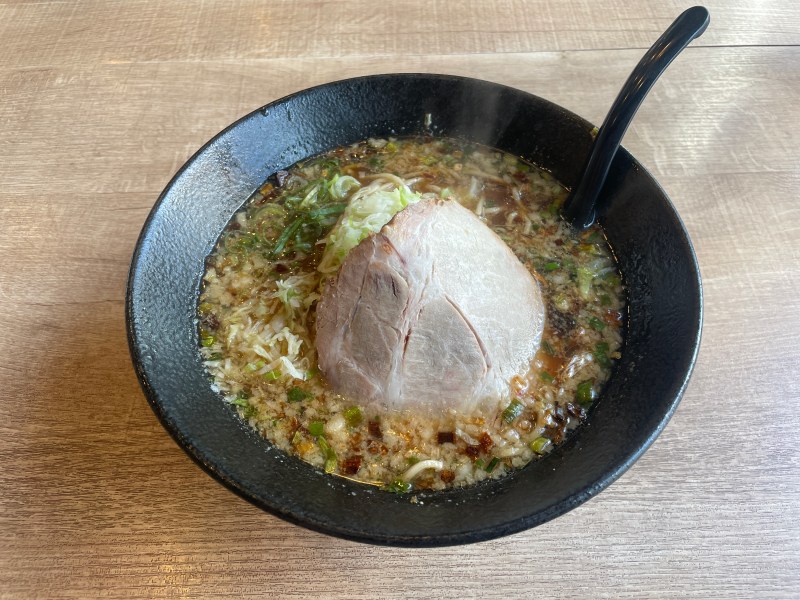
Before our bus back to the airport we grabbed a bowl of Kagoshima ramen from a place called Satsuma Ramen Goroya. The umami in this bowl was a flavour bomb, and I can still also remember the taste of this one. The shredded cabbage was interesting and worked really well when mixed in with the soup. 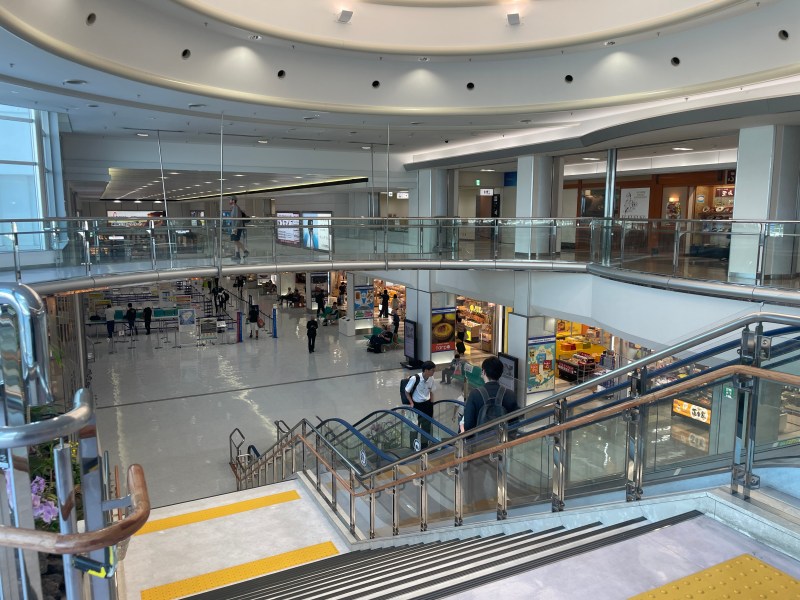
Oh the joys of a simple airport with no people and only one small departure area. Travelling home from Kagoshima airport was super chill. 
See you again!
 IKIMASHO!